University at a Glance
- Home
- University at a Glance
 Walk-in-interview for the engagement of 21 Nos. Teaching Faculty (Contractual) for ITEP programme
Updated Notification regarding half-yearly Progress Reports of Ph.D. scholars
Admissions 2026-27 Helpline

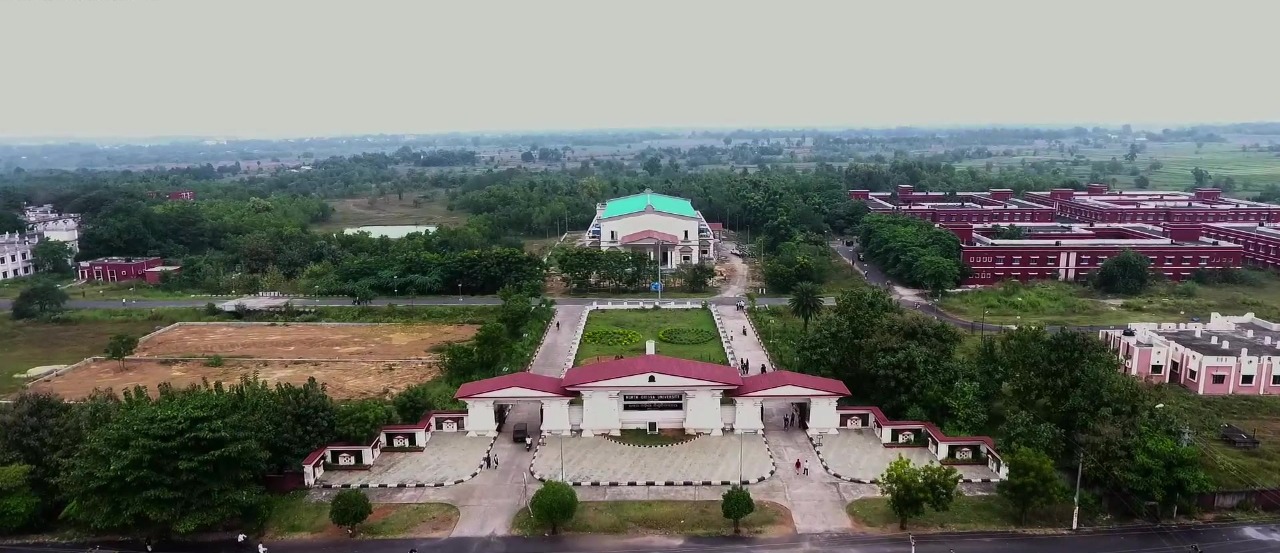
Maharaja Sriram Chandra Bhanja Deo University (MSCBU), formerly North Orissa University, was established by the Government of Odisha on 13 July 1998 under Section 32 of the Odisha University Act, 1989, and has been functioning since 1999 as an affiliating university headquartered at Takatpur, Baripada, in the tribal-dominated district of Mayurbhanj, Odisha. The University is committed to promoting quality higher education, research, innovation, and community engagement while preserving the region’s rich cultural heritage and indigenous knowledge. As a Multidisciplinary Education and Research University (MERU) under the PM-USHA scheme, MSCBU is actively transforming its academic and research ecosystem in alignment with the vision of the National Education Policy (NEP) 2020, with a strong emphasis on multidisciplinary learning, academic flexibility, research excellence, skill development, and holistic student development.
Recognized by the University Grants Commission under Sections 2(f) and 12(B) of the UGC Act, 1956, MSCBU is accredited with an ‘A’ Grade by NAAC (3rd Cycle, valid up to 10 April 2028). It is also recognized by the Bar Council of India, NCTE, IGNOU, and UGC-DEB, and is a member of the Association of Indian Universities (AIU) and the Association of Commonwealth Universities (ACU).
The University has 56 affiliated colleges, including two autonomous colleges and one Teachers’ Education (B.Ed.) College, offering undergraduate and postgraduate programmes across Mayurbhanj district. Its 98.84-acre campus, Sriram Chandra Vihar, is named after the visionary Maharaja Sriram Chandra Bhanja Deo (1871–1912). Located on the outskirts of Baripada, the campus was inaugurated on 15 May 2003 by the then President of India, Dr. A.P.J. Abdul Kalam.
MSCBU presently offers PG programmes in 25 disciplines, Doctoral research in 21 subjects, one Post-PG programme (Int. B.Ed. M.Ed.), several skill-based certificate and diploma courses. Besides, School of Information Technology, Rairangpur under MSCBU offers undergraduate and postgraduate programmes. Through its Centre for Distance and Online Education (CDOE), established in 2003, the University also offers 12 UGC-DEB-approved postgraduate programmes. The University follows the semester and CBCS-based evaluation system and continues to implement progressive academic reforms envisioned under NEP 2020.
The University has developed a vibrant research ecosystem supported by comprehensive policies on research, innovation, intellectual property, consultancy, incubation, and startups. It currently has 351 research scholars and sponsored research projects worth over ₹2.5 crore. Faculty members have contributed 18 patents, 47 externally funded research projects, over 700 publications (including 450 indexed research papers), and 325 books and book chapters. The University’s research quality is reflected in an average impact factor of 2.02, an average citation index of 5.715, and an institutional h-index of 28. It has also established 31 functional MoUs with reputed academic and research institutions to promote collaboration and knowledge exchange.
The University also has an active National Service Scheme (NSS) Bureau and Postgraduate Unit, functioning since 2000, fostering social responsibility, leadership, and community service among students. Since 2026, MSCBU has been implementing the Unnat Bharat Abhiyan (UBA) to strengthen rural engagement and sustainable development initiatives. With support from PM-USHA, the University is actively organizing academic as well as capacity-building programmes, including seminars, conferences, workshops, faculty development programmes, skill development initiatives, and awareness campaigns.